What his words tell us about Trump
US President Donald Trump speaks in a way unlike any of his predecessors. His distinctive and highly recognisable style may even play a role in his appeal to his political base.
Four Hollywood films. Four different genres. All made money in India within six weeks, and not one of them had a superhero. That has not happened here in a very long time.




File Photo
In roughly six weeks between late March and early May 2026, four Hollywood films opened in India and made money. Not superhero money. But real, profitable, hold-well-on-weekdays money.
Here is what each film collected in India:
Advertisement
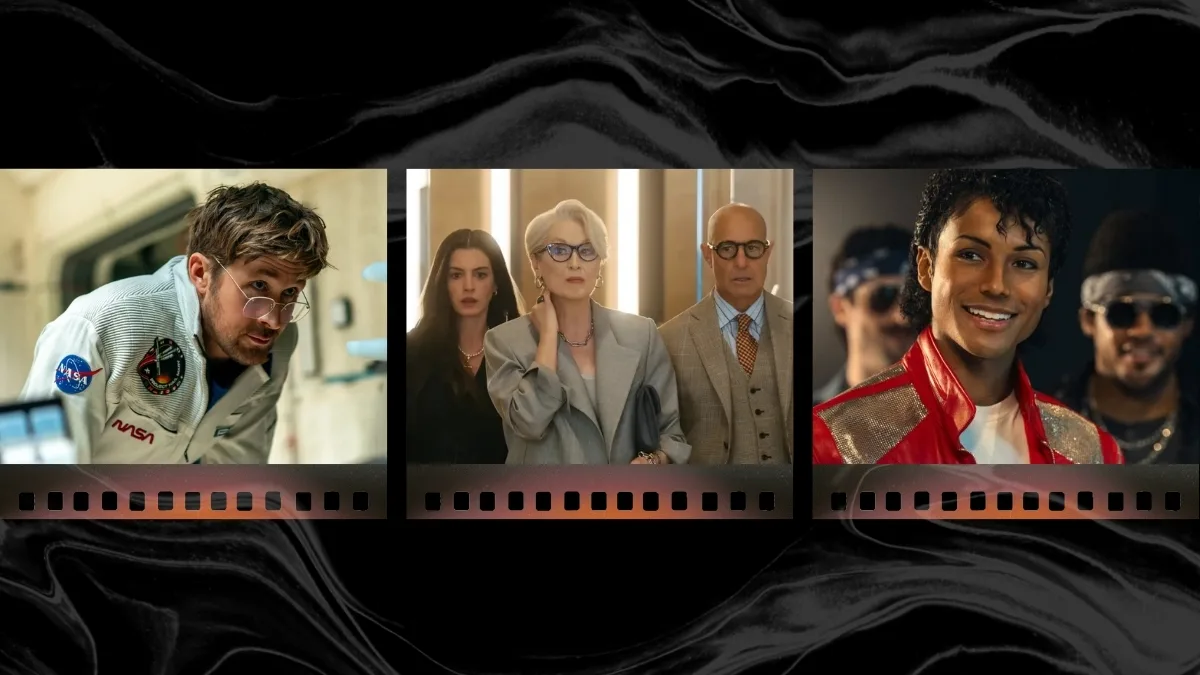
– Project Hail Mary (sci-fi, Ryan Gosling): Rs 85+ crore gross
Advertisement
– Lee Cronin’s The Mummy (horror): Rs 40 crore gross
– Michael (Michael Jackson biopic): Rs 60-65 crore gross
– The Devil Wears Prada 2 (comedy-drama): Rs 35 crore gross (projected)
None of these had a superhero. None had a shared universe. And, none had post-credits scenes teasing sequels. And none of them flopped.
That has not happened in India in a long time.
For context, look at what Hollywood in India used to mean.
‘Avengers: Endgame’ opened to Rs 65 crore on its first day in 2019. It sold 15 lakh tickets in advance. ‘Spider-Man: No Way Home’ opened to Rs 41.5 crore on day one. ‘Avatar: The Way of Water’ grossed Rs 471 crore lifetime, the highest ever for a Hollywood film in India.
Then the MCU started underperforming. Phase 4 films came and went. ‘Thor: Love and Thunder’. ‘Doctor Strange’. ‘Ant-Man’. None of them matched ‘Endgame’. The audience that showed up for capes and universe callbacks started staying home.
‘Oppenheimer’ (2023) grossed Rs 128 crore, a rare non-superhero win. But one Nolan film is not a trend. It was an exception credited to event-cinema status and the Barbenheimer phenomenon.
What is happening in 2026 is different. Four films. Four genres. Steady holds. No opening-day explosions, but no collapses either.
Look at the four films carefully.
‘Project Hail Mary’ is a solo-astronaut story with no action set pieces to speak of. It competed directly against ‘Dhurandhar 2’, the biggest Hindi film ever made, and still crossed Rs 85 crore. It grew on its second weekend, which almost never happens for Hollywood films in India.
Lee Cronin’s ‘The Mummy’ is not the Brendan Fraser franchise. It is a reimagined horror film made on a $22 million budget. It performed best in metros. And, it was a clean hit.
‘Michael’ is a biopic about Michael Jackson, directed by Antoine Fuqua and starring Jaafar Jackson, a complete unknown in India. And, it opened to Rs 3.7 crore net on day one. It closed around Rs 60-65 crore. It performed best in South India and Mumbai, where MJ’s dance legacy had the deepest following.
‘The Devil Wears Prada 2’ opened to Rs 5.5 crore net including previews, the biggest Hollywood opening of 2026. It performed almost entirely in metros: Mumbai, Delhi-NCR, Bengaluru, Hyderabad. Premium chains like PVR INOX drove most of the business.
What ties all four together: they are story-led films. Character-driven. The genre is the hook, not the universe. And they all had some version of nostalgia or IP recognition working for them; a beloved book, a music icon, a 20-year-old franchise, a classic horror series.
This is the part the box office headlines bury.
All four films worked in cities. They performed in English, primarily, with some contribution from Hindi dubs. ‘Project Hail Mary’ grossed around Rs 50 crore in English alone. ‘Michael’ did best in South India and Mumbai. ‘Devil Wears Prada 2’ is described by trade analysts as a “metro film”, meaning it barely registered outside urban multiplexes.
This is not a pan-India Hollywood moment. It is a multiplex-India Hollywood moment.
The audience buying Rs 500-800 tickets at PVR INOX in Bengaluru and Hyderabad has always been there. What has changed is that they are now watching things they previously waited for on streaming. Part of that is because OTT libraries are enormous and there is less urgency to wait. Part of it is that the films themselves are actually good, and word of mouth travels fast enough to sustain a two-week run.
That said, none of these films penetrated single-screen territory in any meaningful way. That market still belongs to Hindi, Tamil, and Telugu mass entertainers.
There is no major Marvel film in this window. ‘Avengers: Doomsday’ is set for December 2026, and it is clashing with ‘Dune: Part 3’. That is a battle India will notice.
But the current run of Hollywood successes did not need Marvel. In fact, the breathing room may have helped. When a new MCU film releases, it takes up screens, buzz, and mindspace. Other English films get squeezed.
Without a Marvel juggernaut in the frame, smaller Hollywood films got wider runs and more favourable showtimes. ‘Project Hail Mary’ ran 1,634 shows on Day 4, a number that would shrink fast if a bigger Hollywood film was competing.
The rest of 2026 has major Hollywood releases scheduled. ‘Spider-Man: Brand New Day’, Christopher Nolan’s ‘The Odyssey’, and ‘Avengers: Doomsday’ are all confirmed. If ‘Doomsday’ performs at the level ‘Endgame’ did, it will dominate the conversation.
But the lesson from this six-week run is narrow: Indian multiplex audiences in metros will watch Hollywood when the film has a recognisable hook, strong reviews, and no massive Indian blockbuster eating all the screens.
That is a specific, limited window. It is not the return of Hollywood dominance in India. The market is still overwhelmingly driven by Indian language films. ‘Dhurandhar 2’ alone earned more than these four Hollywood films combined, many times over.
What 2026 has shown is that non-superhero Hollywood can find its audience in India, if the film is right. That is not a new discovery. It is just not happening as rarely as it used to.
Advertisement